
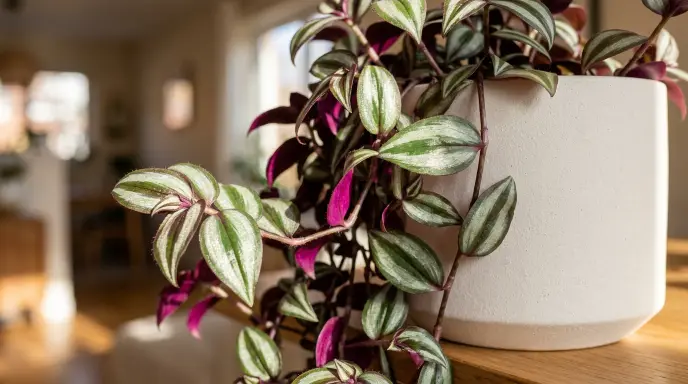
The wandering Jew plant is a popular houseplant known for its colorful leaves, trailing stems, and easy-growing nature.
If you have searched for another name for wandering Jew, you may have noticed that this plant goes by several different names.
Its common alternatives include inch plant, spiderwort, tradescantia, and wandering dude.
These names can refer to plants in the same group, but they are not always interchangeable because the group includes several species and varieties.
Many gardeners now prefer the name wandering dude or simply use the plant’s botanical name, Tradescantia.
These alternatives can help you identify the right plant when shopping for houseplants, reading gardening guides, or sharing plant care advice.
In this article, you will discover the most common alternative names, the meanings behind them, popular varieties, and simple tips for identifying the plant you have at home.
What Is Another Name for Wandering Jew?
Several common names are used for plants traditionally called wandering Jew. The exact name depends on the species, its appearance, and local gardening habits.
- Wandering dude: A widely used modern alternative for the traditional common name.
- Tradescantia: The botanical genus name for many familiar trailing varieties.
- Inch plant: A common name often associated with Tradescantia zebrina and related plants.
- Spiderwort: A common name used for several members of the Tradescantia group.
- Silver inch plant: A descriptive name for varieties with silvery leaf markings.
- Purple heart: A name commonly used for Tradescantia pallida, which has deep purple foliage.
- Moses-in-the-cradle: A common name for Tradescantia spathacea, a related plant with a different growth habit.
- Boat lily: Another name for Tradescantia spathacea.
- Oyster plant: A common name also used for Tradescantia spathacea.
- Small-leaf spiderwort: A descriptive name that may be used for certain smaller-leaved plants in this group.
- Zebrina: A shortened reference to Tradescantia zebrina, known for striped leaves.
- Purple spiderwort: A descriptive name associated with purple-leaved Tradescantia plants.
The most useful alternative depends on which species you own. If you are looking for the familiar trailing houseplant with green, purple, and silver stripes, Tradescantia zebrina or inch plant is often the name you need.
Botanical Names for Wandering Jew Plants
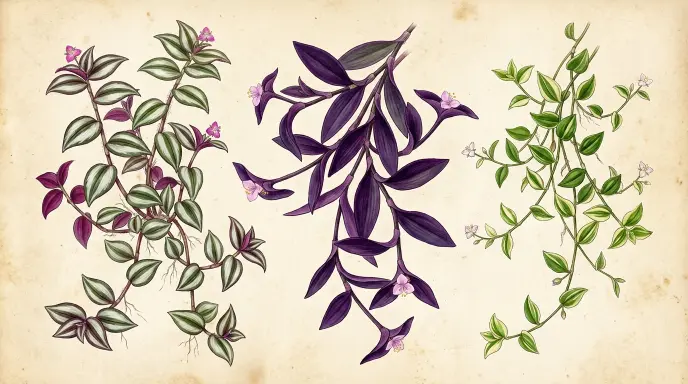
Botanical names help gardeners distinguish between plants that share similar common names. The traditional name has been applied to several Tradescantia species, so checking the scientific name can prevent confusion.
- Tradescantia zebrina: A trailing plant with green, silver, and purple-striped leaves.
- Tradescantia fluminensis: A creeping plant with small, often green leaves.
- Tradescantia pallida: A striking plant with purple stems and leaves.
- Tradescantia sillamontana: A distinctive species with soft, fuzzy leaves.
- Tradescantia spathacea: An upright plant with green leaves and purple undersides.
- Tradescantia virginiana: A North American species commonly known as Virginia spiderwort.
- Tradescantia ohiensis: A species of spiderwort native to parts of North America.
- Tradescantia chrysophylla: A Tradescantia species with distinctive foliage.
- Tradescantia cerinthoides: A species grown for its decorative leaves and trailing growth.
- Tradescantia mundula: A species associated with the broader Tradescantia group.
- Tradescantia pallida ‘Purpurea’: A popular purple-leaved selection.
- Tradescantia zebrina ‘Violet Hill’: A named selection associated with the striped inch plant group.
Scientific names are especially helpful when buying plants online or comparing care instructions. Two plants may share a common name but need slightly different light, watering, or growing conditions.
Common Names for Wandering Jew in Houseplant Stores
Plant shops often use short, familiar names on labels. You may see several alternatives for the same general group of plants.
- Inch plant: Often used for fast-growing trailing varieties.
- Wandering dude: A modern common name for the familiar trailing houseplant.
- Striped Tradescantia: A descriptive label for plants with striped leaves.
- Silver-striped inch plant: A name that highlights the silver bands on the foliage.
- Purple inch plant: A name used for plants with noticeable purple coloring.
- Trailing spiderwort: A descriptive name for plants that grow along the ground or hang from containers.
- Purple Tradescantia: A general label for purple-leaved varieties.
- Zebra plant: Sometimes used informally for striped Tradescantia, although this name can also refer to unrelated houseplants.
- Silver-and-purple Tradescantia: A descriptive name based on its leaf colors.
- Trailing inch plant: A practical label for the plant’s spreading growth habit.
- Variegated Tradescantia: A name for varieties with more than one leaf color.
- Striped wandering dude: A descriptive alternative for a colorful trailing variety.
Common names are not always standardized. For the clearest identification, look for the botanical name on the plant tag rather than relying on a common name alone.
Why Is Wandering Dude Another Name for Wandering Jew?
The name wandering dude has become a popular alternative because many people prefer to avoid the older common name, which is widely considered offensive due to its association with an antisemitic stereotype.
Using wandering dude keeps the familiar idea of a plant that spreads and trails while avoiding the harmful wording. Some gardeners use inch plant, Tradescantia, or the exact species name instead.
Here are useful alternatives you can use in conversation or writing:
- Wandering dude
- Inch plant
- Trailing Tradescantia
- Striped Tradescantia
- Silver-striped inch plant
- Purple Tradescantia
- Trailing spiderwort
- Zebrina
- Variegated inch plant
- Purple-leaved Tradescantia
- Silver-and-green Tradescantia
- Decorative Tradescantia
- Hanging Tradescantia
- Colorful inch plant
- Trailing houseplant
For general gardening discussions, wandering dude or Tradescantia is usually a practical choice. When precision matters, use the scientific name of the specific plant.
Alternative Names Based on Leaf Color
The foliage of Tradescantia plants comes in a range of colors and patterns. Color-based descriptions can help you recognize a variety or describe it to another gardener.
- Silver stripe plant: Suitable as a descriptive label for varieties with silver bands.
- Purple velvet plant: A descriptive nickname for plants with a rich purple appearance, although it is not a standard botanical name.
- Green-and-silver inch plant: Describes foliage with contrasting green and silver markings.
- Purple-striped Tradescantia: Highlights purple stripes along the leaves.
- Silver Queen: A decorative name that may suit a pale, silver-marked plant, but it is not a universal species name.
- Emerald stripe plant: A descriptive label for varieties with prominent green stripes.
- Plum-leaf Tradescantia: A nickname that suits deep plum-colored foliage.
- Violet trail plant: Highlights the plant’s purple tones and trailing habit.
- Zebra-striped inch plant: A clear description of the striped appearance of Tradescantia zebrina.
- Green-and-purple spiderwort: A simple name based on contrasting leaf colors.
- Silver ribbon plant: A descriptive nickname for narrow, silver-marked leaves.
- Purple cascade plant: A fitting informal description for a purple trailing variety.
These are descriptive nicknames rather than universally accepted common names. If you use one on a plant label, include the botanical name whenever possible.
Alternative Names Based on Plant Shape
Tradescantia plants are known for their spreading stems, hanging growth, and sometimes upright leaves. Their shape can inspire useful descriptive names.
- Trailing inch plant: A good description for a plant growing over the edge of a pot.
- Creeping Tradescantia: Suitable for varieties that spread across soil.
- Hanging spiderwort: Describes a plant displayed in a hanging basket.
- Cascade Tradescantia: Highlights stems that flow downward from a container.
- Spreading inch plant: Describes a plant that expands across a growing area.
- Vining Tradescantia: A general descriptive term for plants with long, flexible stems.
- Trailing purple plant: Suitable for purple-leaved varieties with hanging stems.
- Cascading spiderwort: A descriptive name for a plant with a flowing growth habit.
- Ground-cover Tradescantia: Suitable for creeping types when grown outdoors in appropriate conditions.
- Compact Tradescantia: A useful description for a smaller, bushier plant.
- Upright spiderwort: Better suited to species that grow more vertically.
- Hanging purple inch plant: A descriptive label for a purple variety in a hanging container.
Remember that not every Tradescantia has a trailing habit. Some related species grow upright, so plant shape can help narrow down the identification.
Popular Wandering Jew Plant Varieties and Their Names
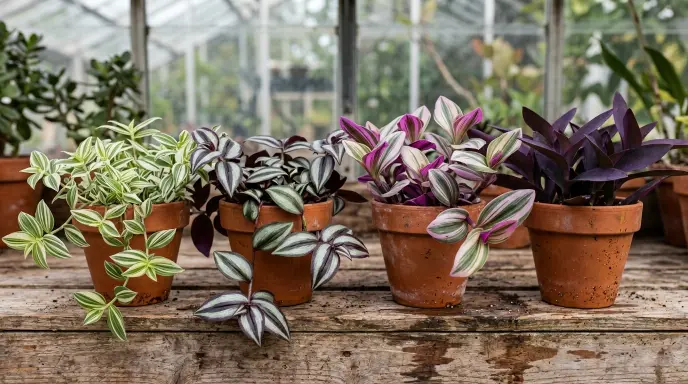
Learning the names of popular varieties makes it easier to select a plant for your home or garden.
- Tradescantia zebrina: Recognized for silver stripes and purple undersides.
- Tradescantia fluminensis ‘Variegata’: A variegated form with contrasting light and green foliage.
- Tradescantia pallida ‘Purpurea’: Known for its deep purple leaves and stems.
- Tradescantia sillamontana: Recognized by its soft, hairy foliage.
- Tradescantia spathacea: An upright plant with sword-shaped leaves.
- Tradescantia virginiana: A spiderwort species with flowers in shades that can include blue, purple, and pink.
- Tradescantia ohiensis: A native spiderwort species with slender leaves and colorful flowers.
- Tradescantia cerinthoides: A species grown for its decorative foliage and spreading growth.
- Tradescantia chrysophylla: A less familiar member of the genus that may appeal to collectors.
- Tradescantia mundula: A species name you may encounter in botanical references and plant collections.
- Tradescantia zebrina ‘Burgundy’: A selection associated with rich burgundy tones.
- Tradescantia zebrina ‘Violet Hill’: A named selection of the striped inch plant.
Availability varies by nursery, and plant labels can differ between sellers. Check the scientific name and the plant’s actual appearance before purchasing.
Other Plants That Are Sometimes Confused With Wandering Jew
Some houseplants have similar leaf colors, trailing stems, or common names. Knowing the differences can prevent you from buying the wrong plant.
- Callisia repens: A small-leaved trailing plant in the same broader family.
- Callisia fragrans: A related plant with long, arching leaves.
- Tradescantia spathacea: A related Tradescantia species that grows in a more upright shape.
- Purple heart: The common name for Tradescantia pallida, a close relative.
- Virginia spiderwort: A flowering species of Tradescantia that differs from common striped houseplants.
- Zebra plant (Aphelandra squarrosa): An unrelated houseplant with bold white leaf veins.
- Purple waffle plant (Hemigraphis alternata): A plant with textured, often purple-toned leaves.
- Swedish ivy (Plectranthus verticillatus): A trailing houseplant with rounded leaves.
- Pothos (Epipremnum aureum): A popular trailing plant with thicker, heart-shaped leaves.
- Heartleaf philodendron (Philodendron hederaceum): A trailing plant with smooth, heart-shaped leaves.
- Coleus (Coleus scutellarioides): A foliage plant with colorful leaves, usually a bushier growth habit.
- Purple passion plant (Gynura aurantiaca): A plant with purple, fuzzy foliage.
These plants are not all members of the Tradescantia group. Some are unrelated species that simply share a similar decorative appearance.
International and Regional Names for Wandering Jew Plants
Plant names can vary across regions, nurseries, and gardening communities. Botanical names are especially useful when common names change between countries.
- Tradescantia: The genus name used internationally in plant identification.
- Inch plant: A familiar English common name.
- Spiderwort: An English common name for several related plants.
- Wandering dude: A modern English alternative to the traditional name.
- Zebrina: A shortened name associated with Tradescantia zebrina.
- Purple heart: An English common name for Tradescantia pallida.
- Boat lily: A common English name for Tradescantia spathacea.
- Oyster plant: Another common English name for Tradescantia spathacea.
- Moses-in-the-cradle: A traditional common name for Tradescantia spathacea.
- Virginia spiderwort: A common name for Tradescantia virginiana.
- Silver inch plant: A descriptive name used for silver-marked varieties.
- Striped inch plant: A descriptive name for striped foliage.
There is no single worldwide list of common names that applies to every Tradescantia species. If you are searching for a plant in another country, its scientific name is the most reliable term to use.
How to Choose the Right Alternative Name
The best name depends on why you need it. A gardener identifying a plant may need a scientific name, while someone writing a plant label may prefer a short, familiar term.
- Check the leaf pattern. Silver stripes and purple undersides are common clues for Tradescantia zebrina.
- Look at the growth habit. Long, flexible stems often suggest a trailing type, while stiff, sword-shaped leaves may indicate a different species.
- Identify the color. Deep purple foliage can point toward Tradescantia pallida.
- Read the plant label. A scientific name is more reliable than an informal nickname.
- Consider the purpose. Use wandering dude or inch plant in casual gardening conversations, and use the botanical name for accurate identification.
- Compare several features. Leaf shape, stem color, growth pattern, and flowers can help distinguish similar plants.
- Check the spelling. Botanical names are often written in italics, with the genus capitalized and the species lowercase.
- Avoid assuming every name means the same plant. Common names sometimes refer to multiple species.
- Ask a nursery professional. A clear photograph and the plant’s growing conditions can help with identification.
- Choose a name you can use consistently. This makes it easier to find the correct care information later.
Caring for a Wandering Dude or Inch Plant
Although care needs vary by species, many popular trailing Tradescantia houseplants are relatively easy to grow. A few basic habits can help keep their foliage colorful and their stems healthy.
- Provide bright, indirect light. Adequate light helps many colorful varieties maintain their patterns.
- Avoid harsh midday sun. Strong direct sunlight can scorch leaves, especially when a plant has not been acclimated.
- Water when the upper soil begins to dry. Do not keep the roots constantly wet.
- Use well-draining potting mix. Good drainage reduces the risk of root problems.
- Choose a pot with drainage holes. Excess water should be able to escape.
- Prune long stems when needed. Trimming can encourage fuller growth and help the plant keep a tidy shape.
- Rotate the container occasionally. This can help the plant receive light more evenly.
- Watch for fading color. Poor light may reduce the contrast in some variegated varieties.
- Check the undersides of leaves. Regular inspection helps you notice pests or leaf damage early.
- Keep the plant away from pets that chew plants. Some Tradescantia species can irritate the skin or cause discomfort if ingested.
Do not assume that every plant sold under a similar common name has identical care requirements. Use the identified species as a guide and adjust watering and light to its actual needs.
FAQs:
What is the most common alternative name for wandering Jew?
Wandering dude and inch plant are two commonly used alternatives. Tradescantia is the botanical genus name for many plants that have traditionally been sold under the older common name.
Is wandering dude the same plant as wandering Jew?
The names are often used for the same familiar trailing houseplant, especially Tradescantia zebrina. However, the older common name has also been applied to other species, so the botanical name is helpful when exact identification matters.
What is the scientific name for wandering Jew?
There is no single scientific name that covers every plant called wandering Jew. Tradescantia zebrina is a common species associated with the familiar striped trailing houseplant. Other species, including Tradescantia fluminensis and Tradescantia pallida, have also been associated with the traditional common name.
Why is the plant called an inch plant?
The name inch plant is commonly linked to the plant’s fast-growing stems and the way it can spread along the ground or trail over a container. It is often used for Tradescantia zebrina and related plants.
Is spiderwort another name for wandering dude?
Sometimes. Spiderwort is a common name used for several Tradescantia species. However, it does not always refer to the same trailing houseplant, so checking the species name is important.
Is purple heart the same as wandering dude?
Purple heart usually refers to Tradescantia pallida, a related plant with deep purple foliage. It belongs to the same genus as the familiar striped inch plant but is a distinct species.
Can I use Tradescantia instead of a common plant name?
Yes. Tradescantia is useful when you want a more precise botanical term. However, because it is a genus containing multiple species, adding the species name provides more specific identification.
Is wandering dude a good name for a plant label?
Yes. It is a recognizable alternative for the traditional common name. For the most accurate label, write the accepted common name alongside the botanical name when you know the species.
Conclusion:
There are several alternatives for the plant traditionally called wandering Jew, including wandering dude, inch plant, spiderwort, and Tradescantia.
The right term depends on the species you have and how precisely you need to identify it. For a familiar striped trailing houseplant, Tradescantia zebrina is often the most useful scientific name.
If you are naming a plant for casual use, wandering dude or inch plant may be easier to remember.
Choose a name that is clear, respectful, and accurate, and check the botanical name whenever you need reliable identification or plant care advice.

Hi, I’m Evelyn, a writer who enjoys creating simple, useful, and engaging content. I love finding interesting ideas and turning them into easy-to-read articles that people can enjoy and learn from.
My goal is to make every article clear, helpful, and enjoyable for readers. I believe good writing should feel natural, friendly, and easy to understand. Thank you for visiting my site, and I hope you enjoy reading my work!