
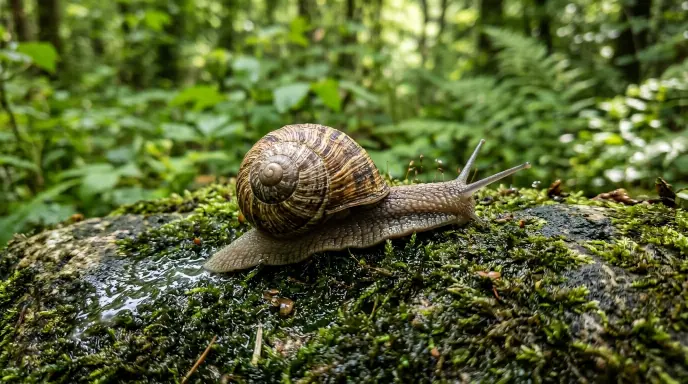
If you are searching for the scientific name for snail, you may be wondering whether all snails have one scientific name.
The answer is a little more interesting than it seems. “Snail” is a common name used for many different gastropod mollusks, so there is not one scientific name that covers every snail.
Scientists classify snails into many groups, families, genera, and species.
In this guide, you will learn how snails are scientifically classified, what the main scientific groups are, and why different snails have different scientific names.
You will also see examples of familiar land, freshwater, and marine snails. This makes it easier to understand the difference between a common name and a scientific name.
What Is the Scientific Name for Snail?
There is no single scientific name for every snail because “snail” describes a broad group of gastropod mollusks rather than one species.
Most animals commonly called snails belong to the class Gastropoda. This class includes a huge variety of animals, including land snails, freshwater snails, and marine snails.
A scientific name usually identifies a particular genus and species. For example:
- Cornu aspersum — commonly called the garden snail
- Helix pomatia — Roman or Burgundy snail
- Lissachatina fulica — giant African land snail
- Planorbarius corneus — great ramshorn snail
- Pomacea canaliculata — channeled apple snail
So, if someone asks for the scientific name of “a snail,” more information is needed to identify the exact species.
Scientific Classification of Snails
Snails belong to the animal kingdom and are part of the large group known as mollusks. Their classification becomes more specific as scientists move from kingdom to species.
A simplified classification is:
| Classification | Group |
|---|---|
| Kingdom | Animalia |
| Phylum | Mollusca |
| Class | Gastropoda |
| Common group | Snails and slugs |
| Genus | Varies |
| Species | Varies |
The important point is that Gastropoda is the scientific class associated with snails and slugs. Individual snail species are then placed into different genera and families.
This is why two very different snails can both be called snails while having completely different scientific names.
Scientific Name for Common Garden Snail
One of the best-known land snails is the common garden snail. Its scientific name is Cornu aspersum.
This snail is commonly found in gardens, fields, parks, and other areas where vegetation grows. It has a rounded shell that is usually brown, yellowish, or a mixture of several shades.
The garden snail is sometimes listed under the older scientific name Helix aspersa. Modern classification generally uses Cornu aspersum.
Other useful facts about this species include:
- Common name: Garden snail
- Scientific name: Cornu aspersum
- Group: Gastropoda
- Habitat: Mostly terrestrial environments
- Diet: Mainly plant material
- Shell: Rounded and patterned
- Distribution: Found in many parts of the world
Scientific Name for Roman Snail
The Roman snail is another well-known land snail. Its scientific name is Helix pomatia.
It is also known by names such as Burgundy snail and edible snail. The species is native to parts of Europe and has a large, rounded shell.
Unlike the garden snail, this species belongs to the genus Helix. The name demonstrates why simply saying “snail” is not enough for scientific identification.
Important details include:
- Common name: Roman snail
- Scientific name: Helix pomatia
- Genus: Helix
- Class: Gastropoda
- Habitat: Terrestrial environments
- Shell: Large and rounded
- Range: Mainly parts of Europe
Scientific Name for Giant African Land Snail
The giant African land snail is commonly known by the scientific name Lissachatina fulica.
It is a large terrestrial snail with a distinctive elongated shell. The species originated in East Africa and has been introduced to other regions.
Because of its size and ability to reproduce rapidly, it is an important species in discussions about invasive organisms.
Quick facts:
- Common name: Giant African land snail
- Scientific name: Lissachatina fulica
- Genus: Lissachatina
- Class: Gastropoda
- Habitat: Land
- Shell: Large and elongated
- Diet: Mostly plant material
Scientific Name for Apple Snail
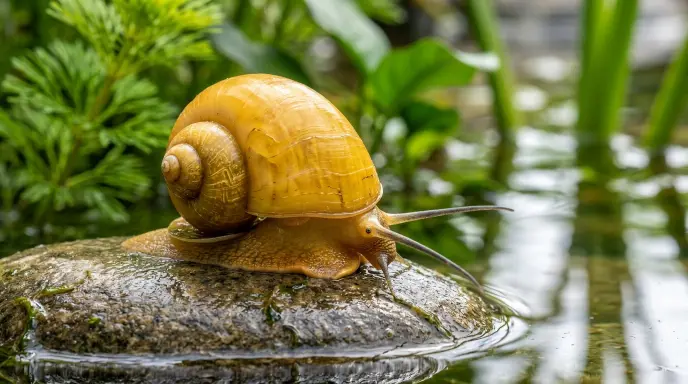
“Apple snail” refers to several freshwater snail species rather than one species. Many belong to the family Ampullariidae.
One familiar example is the channeled apple snail, whose scientific name is Pomacea canaliculata.
Apple snails are freshwater animals. They are often associated with ponds, wetlands, slow-moving water, and other freshwater habitats.
Examples of apple snail names include:
- Pomacea canaliculata — channeled apple snail
- Pomacea maculata — island apple snail
- Pomacea bridgesii — spike-topped apple snail
- Pomacea diffusa — spike-topped apple snail
- Marisa cornuarietis — giant ramshorn snail
The exact scientific name depends on the particular species being discussed.
Scientific Name for Freshwater Snail
There is no single scientific name for all freshwater snails. Freshwater habitats contain many unrelated or distantly related snail species.
Some examples include:
| Common Name | Scientific Name |
|---|---|
| Great ramshorn snail | Planorbarius corneus |
| Channeled apple snail | Pomacea canaliculata |
| New Zealand mud snail | Potamopyrgus antipodarum |
| Malaysian trumpet snail | Melanoides tuberculata |
| Pond snail | Lymnaea stagnalis |
These examples show how broad the word “snail” can be. Each species has its own scientific identity.
Scientific Name for Sea Snail
Sea snails are marine gastropods. Like land and freshwater snails, they do not have one scientific name.
Many different families contain species commonly called sea snails. Some have smooth shells, while others have highly textured or colorful shells.
Examples include:
- Littorina littorea — common periwinkle
- Turbo fluctuosus — Mexican turbo snail
- Haliotis rufescens — red abalone
- Conus textile — textile cone
- Haliotis tuberculata — green ormer
Some marine gastropods are also called whelks, periwinkles, limpets, abalone, or cone snails. These common names refer to different groups rather than one single animal.
Scientific Name for Land Snail
Land snails are terrestrial gastropods that spend most or all of their lives on land.
There are thousands of land snail species, so their scientific names vary widely.
Examples include:
- Cornu aspersum — garden snail
- Helix pomatia — Roman snail
- Lissachatina fulica — giant African land snail
- Cepaea nemoralis — grove snail
- Cepaea hortensis — white-lipped snail
- Eobania vermiculata — chocolate-band snail
- Theba pisana — white garden snail
- Otala lactea — milk snail
- Rumina decollata — decollate snail
- Achatina achatina — Ghana tiger snail
Land snails can vary greatly in shell shape, size, color, behavior, and habitat.
Scientific Name for Snail by Type
Because there are so many kinds of snails, identifying the type first can make the scientific name much easier to find.
| Snail Type | Example Scientific Name |
|---|---|
| Garden snail | Cornu aspersum |
| Roman snail | Helix pomatia |
| Giant African land snail | Lissachatina fulica |
| Grove snail | Cepaea nemoralis |
| White-lipped snail | Cepaea hortensis |
| Channeled apple snail | Pomacea canaliculata |
| Great ramshorn snail | Planorbarius corneus |
| New Zealand mud snail | Potamopyrgus antipodarum |
| Malaysian trumpet snail | Melanoides tuberculata |
| Common periwinkle | Littorina littorea |
This table is useful when you know the common type but need an example of its scientific name.
Scientific Name for Snail Families
Scientists also classify snails into families. A family contains related genera and species.
Some well-known snail families include:
- Helicidae — many familiar European land snails
- Achatinidae — several large tropical land snails
- Ampullariidae — apple snails
- Planorbidae — ramshorn snails
- Lymnaeidae — pond snails
- Littorinidae — periwinkles
- Neritidae — nerite snails
- Muricidae — murex and related marine gastropods
- Conidae — cone snails
- Haliotidae — abalones
Family names are useful for understanding relationships between different types of gastropods.
Why Do Snails Have Different Scientific Names?
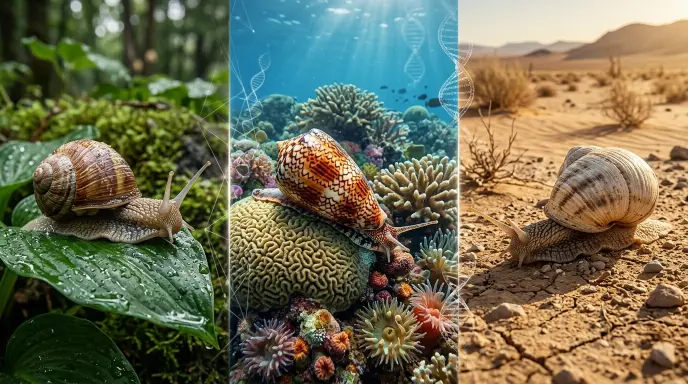
The main reason is simple: snail is a common name, not the name of one species.
Think about the word “bird.” A robin, eagle, and penguin are all birds, but each species has its own scientific name. The same idea applies to snails.
For example, a garden snail and an apple snail have very different lifestyles. One lives mainly on land, while the other lives in freshwater. They therefore belong to different scientific groups.
Scientific names help researchers identify organisms accurately, even when common names vary between countries and languages.
How Scientific Names for Snails Are Written
Scientific names normally use a two-part naming system called binomial nomenclature.
The first word is the genus, and the second word identifies the species.
For example:
Cornu aspersum
Here:
- Cornu is the genus.
- aspersum is the species name.
- Together, they identify the species.
Scientific names are traditionally italicized when typed. The genus begins with a capital letter, while the species name begins with a lowercase letter.
Another example is:
Helix pomatia
“Helix” is capitalized because it is the genus. “pomatia” is lowercase because it is the species part of the name.
How to Identify a Snail Species
Finding the exact scientific name can require more than simply looking at a shell.
Useful identification clues include:
- Shell shape
- Shell size
- Shell color
- Shell pattern
- Number of shell whorls
- Body color
- Habitat
- Geographic location
- Aperture shape
- Behavior
A photograph can help, but some species are difficult to distinguish visually. In scientific research, specialists may use detailed anatomical features or genetic information.
If you need the scientific name of a snail you found, identifying its location and physical features can make the process much more accurate.
Difference Between a Snail and a Slug
Snails and slugs are both gastropods, but they are not exactly the same.
The most obvious difference is the shell. Most familiar snails have an external shell, while slugs generally have a greatly reduced shell or no visible external shell.
Both can be found in terrestrial environments, and they share several biological features. However, they represent many different species and groups.
This means there is also no single scientific name for “slug” in the same way that there is no single scientific name for “snail.”
Interesting Facts About Snails
Snails may look simple, but they have several fascinating features.
- Many snails have a muscular foot that helps them move.
- Most land snails use a structure called a radula to scrape and consume food.
- Snail shells grow as the animal grows.
- Some snail species are adapted to freshwater.
- Others live in oceans and coastal environments.
- Many land snails prefer damp conditions.
- Some snail species can survive periods of dry weather by becoming inactive.
- Snails belong to the incredibly diverse class Gastropoda.
- Some marine gastropods are predators.
- Snails play important roles in many ecosystems.
Their wide range of adaptations is one reason gastropods are such an interesting group for scientists.
Common Snail Scientific Names to Remember
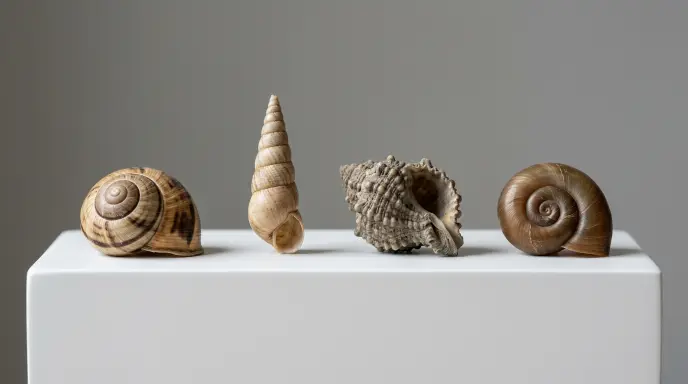
If you only need a few examples, these are useful scientific names to remember:
- Cornu aspersum — garden snail
- Helix pomatia — Roman snail
- Lissachatina fulica — giant African land snail
- Cepaea nemoralis — grove snail
- Cepaea hortensis — white-lipped snail
- Pomacea canaliculata — channeled apple snail
- Planorbarius corneus — great ramshorn snail
- Potamopyrgus antipodarum — New Zealand mud snail
- Melanoides tuberculata — Malaysian trumpet snail
- Littorina littorea — common periwinkle
These names cover several familiar land, freshwater, and marine examples.
How to Choose the Correct Scientific Name for a Snail
If you need a scientific name for a school project, article, identification guide, or research assignment, start by determining what kind of snail you have.
1. Check the habitat
Was the snail found on land, in freshwater, or in the ocean? Habitat can quickly narrow down possible species.
2. Examine the shell
Look at its shape, size, color, pattern, and number of visible coils.
3. Consider the location
Geographic range is often important because some species are found only in particular regions.
4. Compare reliable identification information
Use a reputable field guide, museum resource, university source, or taxonomic database when accuracy matters.
5. Check the current scientific name
Scientific classification can change as researchers learn more about species. An older source may use a different name or synonym.
FAQs:
What is the scientific name for snail?
There is no single scientific name for all snails. Snails belong mainly to the class Gastropoda, while individual species have their own scientific names, such as Cornu aspersum for the garden snail.
What is the scientific class of a snail?
Most animals commonly called snails belong to the class Gastropoda within the phylum Mollusca. Gastropoda also includes slugs and many marine gastropods.
What is the scientific name of a garden snail?
The commonly used current scientific name for the garden snail is Cornu aspersum. It has also been known by the older name Helix aspersa.
What is the scientific name of a giant African land snail?
The giant African land snail is commonly known as Lissachatina fulica. It is a large terrestrial gastropod native to East Africa.
Are all snails in the same family?
No. Snails occur in many different families. Their classification depends on the species and evolutionary relationships.
Is Gastropoda the scientific name for snail?
No. Gastropoda is a scientific class, not the scientific name of one snail species. Many different snails belong to this class.
How many types of snails are there?
There are thousands of gastropod species commonly described as snails. They live in marine, freshwater, and terrestrial environments, and their classification is much broader than one single snail group.
How can I find the scientific name of a snail I found?
Start with its location, habitat, shell shape, shell pattern, size, and other physical features. A reliable species identification guide or taxonomic resource can then help narrow down the species.
Conclusions:
The key thing to remember is that “snail” is a broad common name, not one scientific species name. Most familiar snails belong to the class Gastropoda, but individual species can have very different scientific names.
A garden snail, Roman snail, apple snail, and giant African land snail are all examples of this diversity.
If you need to identify a particular snail, focus on its habitat, appearance, location, and shell characteristics. Once the species is identified, its scientific name becomes much easier to determine.

Hi, I’m Evelyn, a writer who enjoys creating simple, useful, and engaging content. I love finding interesting ideas and turning them into easy-to-read articles that people can enjoy and learn from.
My goal is to make every article clear, helpful, and enjoyable for readers. I believe good writing should feel natural, friendly, and easy to understand. Thank you for visiting my site, and I hope you enjoy reading my work!